Art Activities for Preschoolers: Simple, Creative Ideas for Ages 3 to 6
Give a four-year-old a brush, some paint and a big sheet of paper, and something remarkable happens. They experiment, make choices, tell stories and concentrate, often for longer than you expect. Art is one of the most natural ways young children explore the world and express what they think and feel. It also builds skills they will need later, from holding a pencil to solving problems. This guide brings together easy art activities for preschoolers aged three to six, explains what process art is and why it matters, and offers practical tips for painting, collage and modelling at home, along with simple ways to talk about your child's artwork.
Why art matters in the preschool years
Art is not just a pleasant way to fill a rainy afternoon. When children paint, cut, glue and model, they strengthen the small muscles in their hands and fingers that they will later use for writing. They practise hand-eye coordination, learn about colours, shapes and textures, and see cause and effect in action when two colours mix or a tower of clay collapses.
Art also supports language and thinking. Children describe what they are making, plan what to do next and change their minds when something does not work. Perhaps most importantly, art gives children a way to express feelings and ideas they cannot yet put into words, and the confidence that comes from making something that is truly their own.
What is process art?
Process art puts the experience of making at the centre, rather than a finished product that looks a certain way. There is no model to copy and no right answer. A child might spend twenty minutes mixing colours and end up with a brown sheet of paper, and in process art that is a success, because they have explored, experimented and made their own decisions.
Product-focused crafts, where every child makes the same paper plate animal following step-by-step instructions, have their place, and children often enjoy them. But when every result must look the same, adults tend to take over, and children learn that there is a correct way to make art. A good balance leans towards open-ended activities, with occasional guided crafts for special occasions.
Signs an activity is process art
- There is no sample to copy, and every child's result looks different.
- Children choose the materials, colours and how to use them.
- The activity can last as long or as short as the child wants.
- Adults comment on what the child is doing rather than on how the result looks.
Painting activities for kids aged 3 to 6
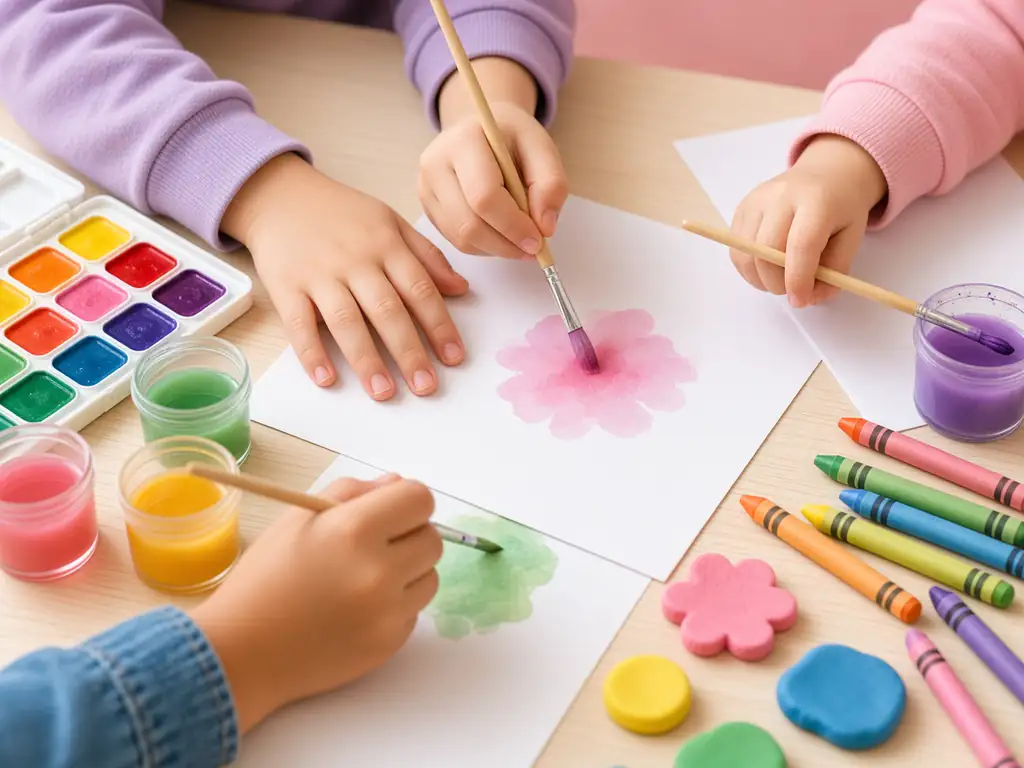
Painting is often the favourite, and it can be adapted endlessly. Thick, washable paints and chunky brushes are easiest for younger children; older preschoolers enjoy thinner brushes and more colours. Covering the table and dressing children in an old shirt makes it easier for everyone to relax.
- Colour mixing: offer only red, yellow and blue, and let children discover the colours they can make.
- Painting with objects: sponges, corks, leaves, toy cars and potato halves all make interesting marks.
- Big painting: tape a large sheet of paper to the floor or a wall outside and paint standing up, using the whole arm.
- Water painting: on a hot day, give children a bucket of water and a brush to paint walls and paving; the pictures disappear as they dry.
- Salt and watercolour: sprinkle salt on wet watercolour and watch the patterns appear.
- Fold painting: add blobs of paint to one half of a sheet, fold, press and open to find a symmetrical picture.
Collage for preschoolers
Collage is ideal for developing scissor skills and making choices. It also turns everyday materials into art supplies, which children love. Collect a box of interesting bits and pieces and bring it out whenever there is time.
- Scraps of coloured and textured paper, tissue paper, foil and old magazines.
- Fabric scraps, wool, ribbons and buttons, with supervision for younger children.
- Natural materials such as leaves, petals, twigs, sand and seeds gathered on walks.
- Cardboard tubes, bottle tops and small boxes for three-dimensional collage.
Offer glue sticks for younger children and liquid glue with a spreader for older ones. Let children tear paper before they can cut; tearing is excellent practice for finger strength. Child-safe scissors with rounded ends are best when they are ready to cut.
Modelling, drawing and other materials
Playdough, clay and salt dough let children squeeze, roll, pinch and flatten, which builds hand strength and gives a satisfying sensory experience. Simple tools such as blunt knives, rolling pins and cookie cutters extend the play. Drawing with chunky crayons, chalk on paving or felt-tip pens on a roll of paper gives children the chance to practise marks, lines and, eventually, recognisable pictures.
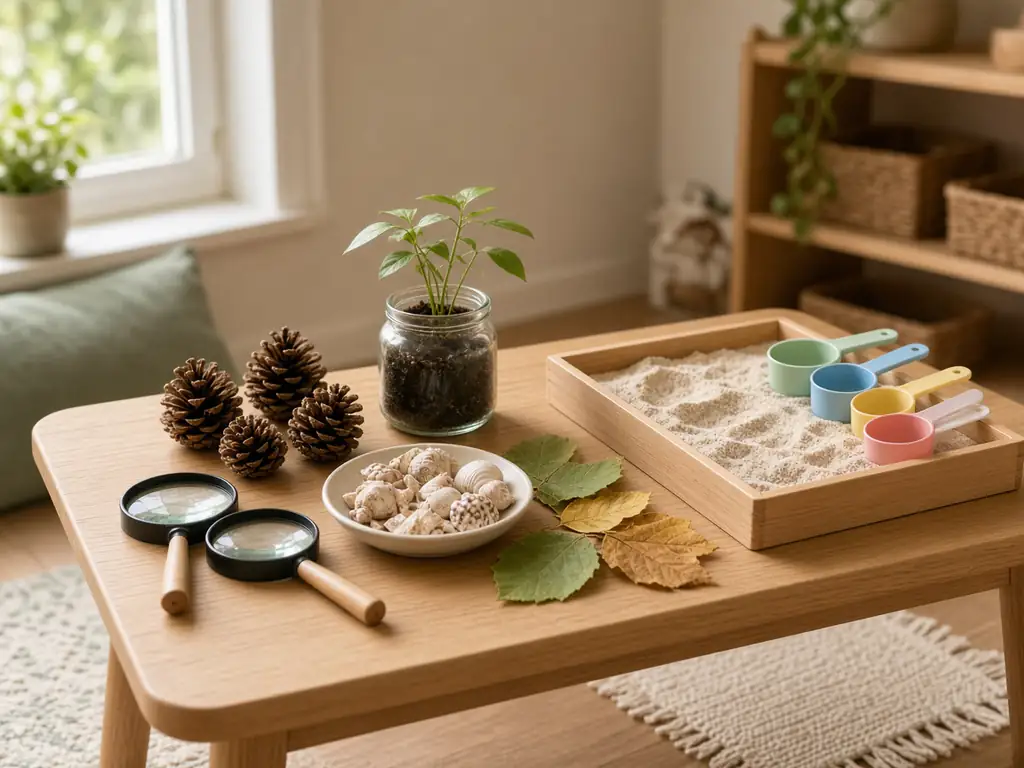
Art does not always need paper. Arranging stones and shells into patterns on the beach, building with blocks or decorating a sandcastle are creative too. The same open-ended thinking appears in maths play; our guide to early math skills in preschool shows how patterns and shapes link art and numbers.
Setting up art at home
- Choose a space that can get messy, such as the kitchen table, a balcony or a corner of the garden.
- Cover the surface with an old tablecloth or newspaper, and dress your child in old clothes or an apron.
- Put out a small selection of materials rather than everything at once.
- Let your child lead. Offer ideas only if they ask or seem stuck.
- Build tidying up into the activity, with children helping to wash brushes and put things away.
- Display finished work at your child's eye level, and let them choose which pieces to keep.
Keep a simple art box within your child's reach with paper, crayons and a glue stick. Children who can start creating on their own do so far more often.
How to talk about your child's art
What adults say about children's art makes a real difference. Generic praise such as "That's beautiful!" is kind, but it tells children little and can make them paint to please. Describing what you see and asking open questions encourages them to think and talk about their work.
- "You used lots of blue in this corner."
- "Tell me about your picture."
- "How did you make this swirly pattern?"
- "What was your favourite part to make?"
Avoid guessing what a picture is, and never correct a child's art. If a purple dog makes sense to them, it is a purple dog. Writing down what your child tells you about a picture, on the back or in a corner, turns it into a small record of their thinking at that age.
Art in a play-based preschool
In a play-based setting, art is part of everyday learning rather than a separate subject. Children return to materials again and again, build on their own ideas and work alongside friends. If you are weighing up different approaches to early education, our comparison of Montessori and play-based preschool explains how they differ.
At Altın Anahtar in Alsancak, the preschool programme for children aged 3 to 6 follows a play-based, child-centred approach, with learning through play, exploration and hands-on experience. Teaching is in Turkish, with English built into the daily routine. To see the classrooms, you can contact the Altın Anahtar team and arrange a visit by appointment.
Frequently Asked Questions
Which art activities suit preschoolers?
Open-ended activities work best: painting, colour mixing, collage, playdough and drawing with a range of materials. Choose activities where children make their own decisions and every result looks different.
What is process art in preschool?
Process art focuses on the experience of making rather than a finished product. There is no model to copy, and children explore materials and make their own choices.
At what age can children use scissors?
Many children start using child-safe scissors with rounded ends at around three, with close supervision. Tearing paper and playing with dough are good ways to build the hand strength needed first.
How can I keep art at home less messy?
Cover the table, use washable paints and old clothes, put out a few materials at a time and make tidying up part of the activity. Outdoor art on a warm day is another easy option.
What age group does the Altın Anahtar preschool programme serve?
The preschool programme is for children aged 3 to 6 and follows a play-based, child-centred approach.